
Have you ever walked into a house and thought:
"Wow, this is bigger than I expected."
Then you look at the listing and realize it's actually smaller than another home you toured earlier that somehow felt cramped?
You're not imagining it.
Square footage doesn't tell the whole story.
The way a home uses natural light, space, layout, and sightlines can completely change how it feels when you walk through the door.
And that's something every homebuyer should pay attention to.
Because sometimes, the home that looks best on paper isn't the one that lives the best.
Why Does One Home Feel Bigger Than Another?
Two homes can have similar—or even identical—square footage and feel completely different.
That's because perceived space isn't determined by square footage alone.
Factors such as natural light, ceiling height, room layout, windows, furniture placement, and visual flow can all influence how large a home feels.
When you're touring homes, don't just ask:
"How many square feet is this?"
Also ask:
"How does this space actually work?"
1. Natural Light Can Make a Home Feel Larger
Natural light is one of the biggest factors affecting how spacious a home feels.
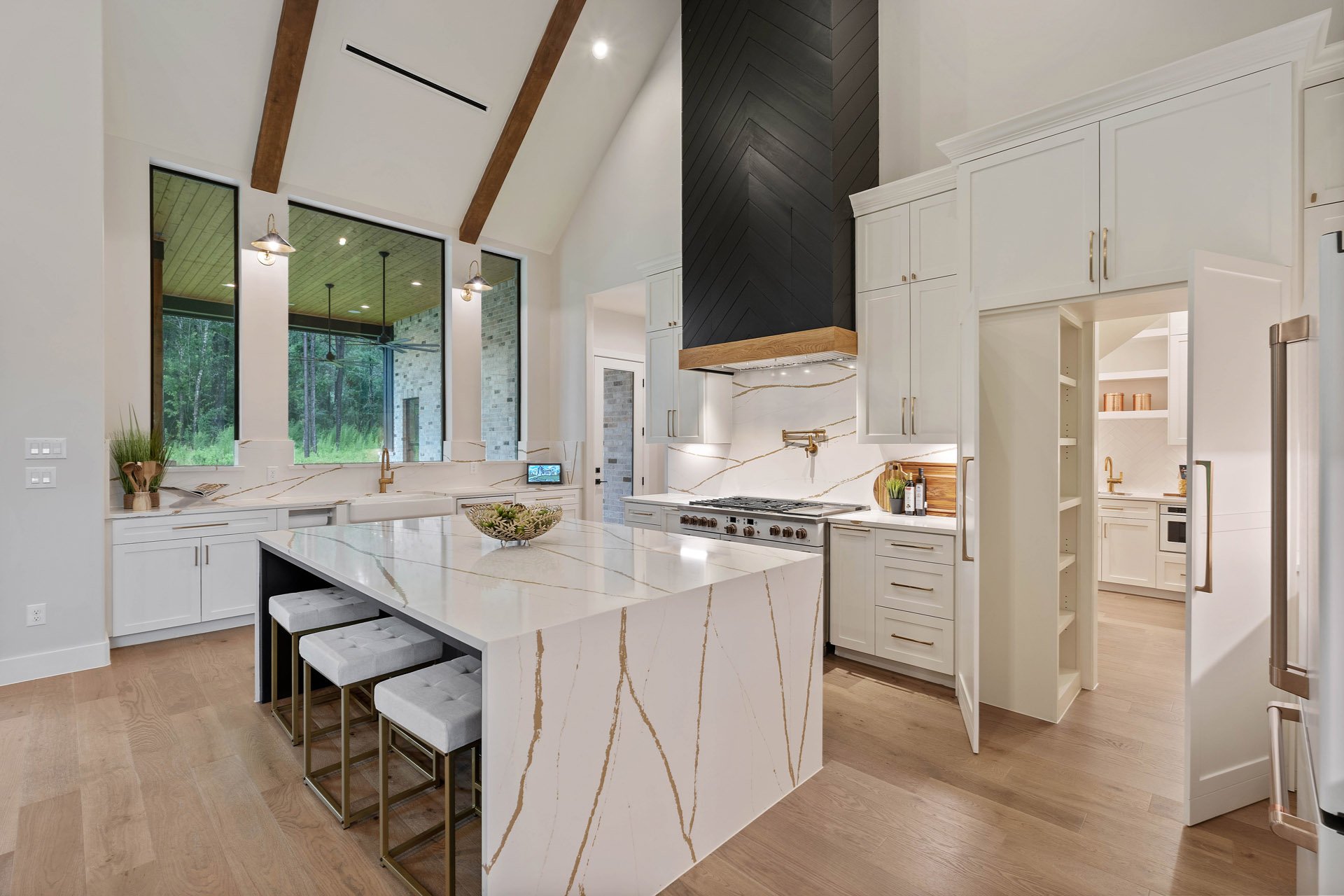
Large windows, glass doors, and open sightlines allow light to travel farther through a home, making rooms feel brighter and more open.
Tall windows can also draw your eyes upward, while strategically placed windows can create a stronger connection between indoor and outdoor spaces.
A darker room can feel smaller and more enclosed, even when it has plenty of square footage.
That's why two rooms of the same size can create completely different first impressions.
More light doesn't necessarily mean more square footage—but it can make the square footage feel more generous.
2. An Open Layout Can Change the Entire Experience
Then there's the floorplan.
A home with connected living spaces can feel significantly larger than a home with the same amount of square footage divided into smaller, enclosed rooms.
Think about the difference between:
- A kitchen that opens into the living room
- A dining area connected to the main living space
- Wide doorways between rooms
- Clear sightlines from one area to another
- Fewer unnecessary walls
When you can see from one space into the next, your eyes perceive the home as one larger environment rather than a collection of small rooms.
You're not just buying square feet. You're buying how those square feet work together.
3. Ceiling Height Can Create a Sense of Space
Don't forget to look up.
High ceilings can make rooms feel larger by adding visual height and drawing your attention upward.
Vaulted ceilings, two-story spaces, tall windows, and architectural details can all contribute to a greater sense of openness.
This is particularly noticeable when comparing homes with similar floorplans but different ceiling heights.
The footprint may be nearly identical.
The experience isn't.
4. Furniture and Clutter Can Make a Room Feel Smaller
Here's another factor buyers sometimes overlook:
What's inside the room can make it feel smaller, too.
Oversized furniture, cluttered countertops, too many accessories, or furniture arranged in a way that blocks natural pathways can make a perfectly good room feel cramped.
When you're touring a home, try to look past the seller's furniture and belongings.
Instead, ask yourself:
Could I comfortably live in this space?
Could your furniture fit?
Is there a clear path through the room?
Would you arrange the space differently?
Can you picture how you'd actually use it?
You're not buying their furniture.
You're buying the space underneath it.
5. Sightlines and Flow Matter More Than You Think
One of the easiest ways to evaluate a home is to pay attention to what you can see from each room.
When you walk through the front door, can you see into the main living areas?
From the kitchen, can you see the backyard?
Does the home have a natural flow from one space to another?
Or do walls, hallways, and awkward transitions constantly interrupt the experience?
Good sightlines create continuity.
And continuity can make a home feel substantially more spacious.
6. Outdoor Space Can Make the Home Feel Bigger, Too
Your perception of space doesn't necessarily stop at the back door.
Large windows, sliding glass doors, covered patios, outdoor kitchens, and thoughtfully designed landscaping can visually extend the living area into the backyard.
A home with a well-connected outdoor living space can feel like it has more usable space than the interior square footage suggests.
This is particularly valuable in areas like North Houston, where homeowners often prioritize outdoor living, pools, patios, and backyard entertaining.
Don't Automatically Eliminate a Home Because of the Numbers
This is one of my favorite parts of helping buyers.
You start with a list:
"We need at least this much square footage."
"We have to have this neighborhood."
"We definitely aren't interested in that style of house."
Then you walk into a home that doesn't quite check every box.
And suddenly you're thinking:
"Wait. I actually really like this."
That's why I encourage buyers to look beyond the numbers and pay attention to how a home actually feels.
You might discover that the home you thought you wanted isn't the home that works best for your lifestyle.
Sometimes expanding your search slightly—or being willing to consider a different floorplan—can lead to a home that feels more spacious and functional without necessarily increasing your budget.
The Same Principle Applies to Your Home's Value
There's an important lesson here for homeowners, too.
Two homes with similar square footage can have very different values.
Why?
Because buyers aren't comparing square footage alone.
They're looking at:
- Location
- Condition
- Layout
- Updates
- Lot size
- Natural light
- Outdoor living
- Overall functionality
- Buyer demand
The way a home lives can have a meaningful impact on how buyers perceive its value.
That's also why an online home value estimate can be a useful starting point—but it doesn't tell you the entire story.
A property's actual market value depends on far more than a single algorithmic estimate.
Frequently Asked Questions
• What makes a home feel bigger than it actually is?
Natural light, open floorplans, high ceilings, large windows, clear sightlines, thoughtful furniture placement, and strong indoor-outdoor flow can all make a home feel more spacious than its actual square footage.
• Does an open floorplan make a house feel bigger?
Often, yes. Open or connected living spaces allow your eyes to move through multiple areas at once, which can create a stronger sense of space than the same square footage divided into smaller rooms.
• Does natural light make a house look bigger?
Yes. Natural light can make rooms feel brighter, more open, and less confined. Large windows and glass doors can also improve sightlines and connect interior spaces to the outdoors.
• Is square footage the most important factor when buying a home?
Square footage is important, but it isn't the only factor. Layout, location, condition, lot size, natural light, functionality, and how well the home fits your lifestyle can be just as important.
• How can I tell if a house will feel spacious before buying it?
Walk through the home rather than relying only on the listing photos and square footage. Pay attention to natural light, room flow, ceiling height, furniture placement, storage, sightlines, and whether you can comfortably imagine your everyday life in the space.
The Bottom Line
When you're buying a home, it's easy to get caught up in the numbers.
Square footage.
Bedrooms.
Bathrooms.
Price.
Those things matter.
But don't overlook the things that don't show up neatly on a listing sheet.
How does the home feel when you walk through the door?
Does the layout make your life easier?
Can you picture your furniture fitting comfortably?
Does the home give you the space you actually need—not just the number of square feet you think you need?
Because sometimes, the best home isn't the one with the most space. It's the one that makes the most of the space it has.
And that's something you can only discover when you look beyond the numbers.
Check out this article next